Water is an essential component of the daily diet and is necessary for the normal functioning of the body. It plays a role in maintaining normal body temperature, supporting physiological processes, and ensuring proper cognitive and physical function.
Although water is readily available every day, we do not always pay sufficient attention to our fluid intake. Fluid requirements may vary depending on age, sex, physical activity, health status, ambient temperature, diet, and other individual factors.
How Much Water Should You Drink?
There is no single amount of water that is appropriate for everyone. The European Food Safety Authority (EFSA) has established reference values for total water intake, which includes water obtained from all sources, including beverages and food.
For adults, EFSA recommends an adequate total water intake of approximately 2 litres per day for women and 2.5 litres per day for men under conditions of moderate ambient temperature and physical activity. This does not mean that these amounts must be consumed as drinking water alone, as some of the body's fluid requirements are met through food and other beverages.
During hot weather, physical exertion, or other circumstances involving increased fluid loss, the body's water requirements may increase.
Why Is Hydration Important?
Water performs many essential functions in the body. It plays a role in thermoregulation, may help maintain normal physiological processes, and is essential for the body's normal functioning.
Based on scientific assessments conducted by the
EFSA, the European Commission states that water consumption may contribute to the maintenance of normal physical and cognitive functions, as well as normal thermoregulation. Therefore, drinking water regularly throughout the day is a simple daily habit that
Water and Minerals
Hydration is associated not only with the amount of fluid consumed but also with the body's
fluid and electrolyte balance. Minerals include, among others, sodium, potassium, calcium, and magnesium.
Potassium
At the request of the European Commission,
EFSA established an adequate intake of potassium for adults at 3,500 mg per day. Potassium is an essential mineral involved in regulating intracellular fluid balance, maintaining normal nerve and muscle function, and supporting various other physiological processes. Scientific evidence reviewed by EFSA indicates that a potassium intake of 3,500 mg per day has a beneficial effect on blood pressure.
Magnesium
According to EFSA, magnesium acts as a cofactor in more than 300 enzymatic reactions and is involved in the functioning of the neuromuscular and cardiovascular systems, among other physiological processes. EFSA has established adequate intake levels for adults at 350 mg per day for men and 300 mg per day for women.
Calcium
As
EFSA notes, calcium is a key structural component of the skeleton: approximately 99% of the body's calcium is found in bones and teeth, while the remainder is involved in various physiological processes, including neuromuscular function. EFSA also notes that hard water can make a significant contribution to calcium intake.
The
World Health Organization Regional Office for Europe (WHO/Europe), in its publication “Staying Hydrated in the Heat: What the Public Can Learn from Professional Athletes”, explains that during hot weather and physical activity, the body loses water through sweating. Electrolytes, including sodium, calcium, and potassium, are also lost through perspiration.
WHO/Europe explains that these minerals are essential for several important bodily functions, including the regulation of muscle contractions and the maintenance of fluid balance. During periods of excessive sweating, electrolyte losses may be accompanied by symptoms such as fatigue, headache, nausea, and muscle cramps.
Maintaining the Balance
Under normal conditions, the body obtains the minerals it needs from a varied diet and beverages. The need for additional mineral intake may increase when substantial fluid losses occur, for example, during intense physical activity or hot weather.
The World Health Organization Regional Office for Europe (WHO/Europe) specifically emphasises the importance of maintaining fluid and electrolyte balance in high-temperature conditions.
Mineral water can be a source of certain minerals; however, their concentrations depend on the natural mineral composition of the particular water.
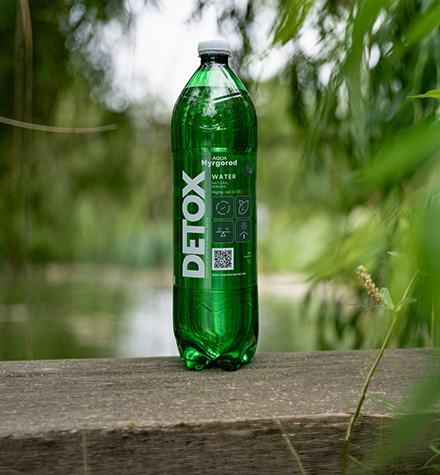
AQUA Myrgorod DETOX natural mineral water is extracted from a 695-metre-deep well in the Myrgorod region. DETOX contains chloride ions
Cl⁻ (1,850 mg/L), bicarbonates
HCO₃⁻ (375 mg/L), and sulphates
SO₄²⁻ (250 mg/L). In addition, AQUA Myrgorod DETOX contains magnesium
Mg²⁺, calcium
Ca²⁺, and sodium
Na⁺.
Scientific Sources
European Food Safety Authority (EFSA) – Dietary Reference Values for Water. EFSA's scientific opinion on adequate water intake and the factors influencing water requirements.
EFSA – Dietary Reference Values for Water
European Commission – Health Effects Related to Water Intake. A review of scientific evidence concerning the physiological role of water and authorised health claims.
European Commission – Water and Health
European Commission – Nutrition and Health Claims. Information on European Union (EU) regulations governing the use of health claims for food products.
European Commission – Health Claims
World Health Organization Regional Office for Europe (WHO/Europe) – Staying Hydrated in the Heat. An article addressing hydration and fluid and electrolyte balance in high-temperature conditions.
WHO/Europe – Staying Hydrated in the Heat